
More property owners are becoming aware of the increasing problem of pigeons, which cause destruction of buildings, pose a health hazard and require expenditures of money. A feral pigeon trap represents an efficient tool to decrease the number of pigeons without continuous chasing of the birds around. This measure attracts considerable interest as a direct action which can be used together with other measures for more persistent results.
Why Are Feral Pigeon Problems More Difficult to Tolerate?
One may notice a tendency among various property owners from the big cities and towns. There are more and more feral pigeons in each place. Moreover, there appears to be trouble associated with their droppings. Those are accumulated on the roof, balconies and even pavement. White spots and stains spoil the stonework and rust the metal of the building and even people step in the excrements and spread them around.
There arise health concerns because those excrements are carriers of the infectious disease. Furthermore, the birds themselves use gutters and areas under the roofs for nesting and thus block the flow of water, which causes additional damages. All these expenses become unbearable for some owners who are looking for means of dealing with such a situation. A feral pigeon trap is one of the most promising methods among them.
What Factors Make Pigeon Populations So Persistent in Urban Environment?
One can find numbers that speak for themselves. The population of urban pigeons grows considerably due to their abundance of food resources and comfortable conditions for nesting. It is bread crumbles, spilled grain and other sources of nutrition that encourage the development of the bird colony.
Managers of the property and private owners recognize the tendency each year and hire cleaning services that wash the surfaces. However, after a month, the situation repeats and the white crust reappears. Cleaning becomes expensive and tiresome. People begin to wonder how to reduce the size of the flock.
Why Are Traditional Pigeon Deterrents Not Always Enough?
Deterrent systems of the past are still widely applied in certain cases. Netting may be successful in some areas. Visual deterrents and acoustic deterrents are other popular options. However, pigeons learn how to recognize the nets with gaps. In addition, the plastic owls cease scaring the birds after a week. The birds continue returning to the same ledges since the source of food and shelter is still attractive.
When trying to scare away the birds using the above techniques alone, the owner faces disappointment. The feral pigeon trap provides a new solution since it helps to remove birds from the place instead of just driving them away from the area. When the birds are removed, they do not return to the same nesting places the following day. This is the reason for growing popularity.
How Can Feral Pigeon Traps Help Address Health and Safety Concerns?
The health and safety concerns play an important role in making decisions. Pigeon droppings are not only unsightly but also dangerous since they can carry different bacteria and fungi which turn into air when dried and disturbed. Thus, building maintenance personnel and the property residents are exposed to these risks.
The risk of liability issues is associated with the slippery surfaces caused by fresh droppings in staircases and entryways. There are insurance companies aware of claims concerning the bird mess. Commercial buildings and rental properties' owners experience such pressure. The fewer pigeons mean the lower amount of the droppings.
Can Pigeon Trapping Reduce Long-Term Property Maintenance Costs?
There is the cost factor that should be considered by most people. It includes regular expenses on cleaning service and the roof repair related to blocked drains and corrosion of metal. After calculating the yearly expenses connected with pigeon mess, the owners sometimes find out about the possibility of the cost compensation with the help of trapping.
There are professional services that install and provide the traps maintenance, so the owner is relieved from daily monitoring. The majority of trapping programs offer humane removal of the birds, which is an important detail for those who value efficiency but still would like to avoid cruel methods. Someone tries a trap setup, sees results, and tells the next person. That quiet network of experience drives more people to look into it.
What Legal and Practical Aspects Should Be Considered?
Legally and practically there are some aspects that affect the decision making as well. For example, in many places pigeons are treated as pests, thus the methods of control can be used without much restriction, but nevertheless they should be legal and non-controversial.
Using live-trapping followed by relocation or some other acceptable handling is preferable from such a perspective. Managers of the property located in densely-populated areas like methods that do not draw attention of the neighbors. They don't want them to complain about noise or toxic substances. Using a feral pigeon trap will solve the problem quietly.
How Does a Feral Pigeon Trap Work?
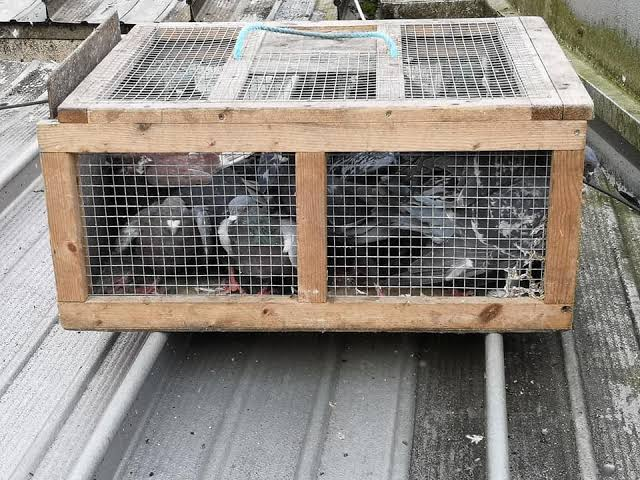
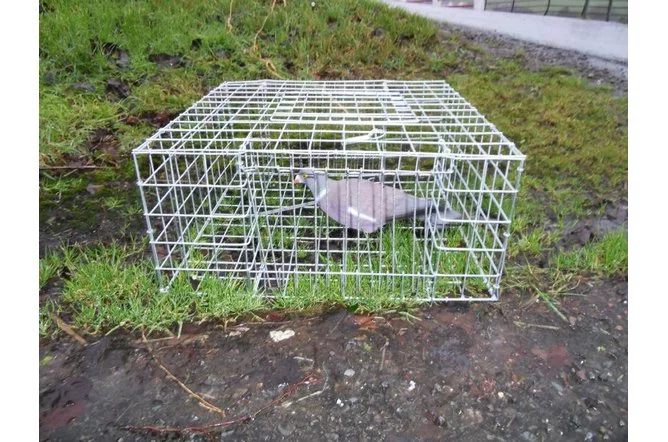
The simple mechanism of the traps makes them attractive. Birds go into one-way doors or cages that can catch them through bait. They can not escape and stay in the trap until the time comes to collect them.
Right placement of traps is also important. Experienced users place traps close to the location where birds nest or feed. Effectiveness can be increased by restriction of food resources for birds. Those property owners who use trapping along with the basic sanitization procedures are likely to have better results. Traps don't promise to eliminate all birds overnight. It promises gradual reduction of their numbers. This reasonable goal matches with the way of solving problems of the property owners.
When Is the Best Time to Use a Feral Pigeon Trap?
Changes during the season also affect the time for using traps. Spring and summer months are characterized by birds' nesting activities. Birds have new offspring and thus more pressure. Those owners who act before reaching the peaks of birds' numbers often have to make smaller efforts in future.
Winter months are also effective because of the concentration of birds around available food and shelters. Property owners who monitor their property during the whole year understand such patterns and don't wait until the situation will become unbearable. Feral pigeon trap fits well into the system of preventive actions.
What Results Can Property Owners Expect From Pigeon Trapping?
Real-world results vary by site, of course. A small residential ledge is different from a large warehouse roof. Still, the pattern holds across many cases. Properties that introduce trapping alongside other steps report fewer birds settling in for long periods.
Maintenance costs edge downward. Tenant or customer complaints drop. The sense of constantly fighting a losing battle eases. Those outcomes matter more than perfect theoretical solutions. Owners talk to each other. They share what worked on their building. That practical exchange keeps interest in traps growing even as new products appear on the market.
Why Could Pigeon Trapping Become a More Common Control Method?
Looking ahead, the trend seems likely to continue. Cities keep expanding. Food waste and architectural features that favor pigeons are not disappearing. Climate shifts may alter breeding seasons or food availability in ways that increase pressure in some regions.
Property owners who treat the problem as a permanent management issue rather than a temporary annoyance tend to fare better. A feral pigeon trap becomes one tool in a larger kit. It does not replace good design choices or regular upkeep. It simply gives owners a way to reduce the active bird population when other measures fall short.
Conclusion
More property owners turn to a feral pigeon trap because the old cycle of cleaning and temporary deterrents no longer keeps pace with the problem. The method offers a direct way to lower numbers, cut ongoing mess, and reduce health and maintenance risks.
Results come from consistent use combined with basic site improvements. While pigeon spikes remain useful for blocking specific ledges and preventing landing, traps address the birds themselves. Together these approaches give owners more control than either one alone. The shift is practical, not dramatic. People simply want solutions that work longer and cost less over time.